

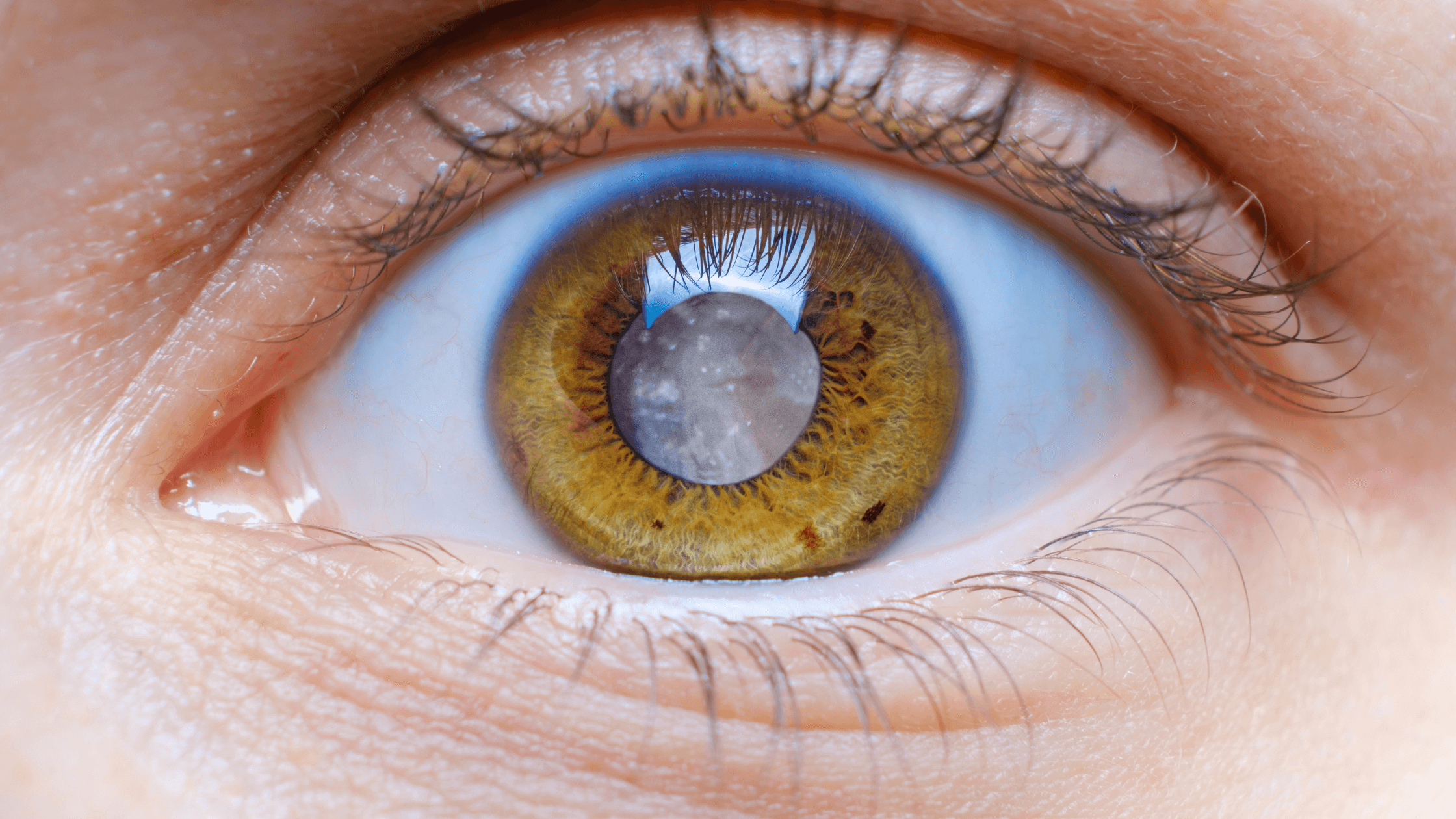
A cataract forms when the natural lens inside your eye, a clear, flexible structure that focuses light onto your retina, gradually becomes cloudy. Proteins in the lens break down over time and clump together, creating areas of opacity that scatter incoming light instead of focusing it sharply. The result is vision that becomes progressively hazy, dim, or washed out.
Wet AMD is less common but far more aggressive. It develops when abnormal blood vessels grow beneath the retina and leak blood and fluid into the macula, causing rapid distortion and vision loss. Wet AMD can develop suddenly from dry AMD that has been stable for years, which is why ongoing monitoring is essential even when your dry AMD appears unchanged. When caught early, wet AMD can be treated with anti-VEGF injections administered by a retinal specialist.
Most cataracts develop as a natural part of aging, but several factors can accelerate them:
Not every cataract requires surgery. In the early stages, an updated eyeglass prescription, better lighting, and anti-glare coatings may be enough to maintain comfortable vision. Dr. Perez will help you understand where you are on the spectrum and have an honest conversation about when the cataract is affecting your quality of life enough to consider surgical removal.
When the time comes, cataract surgery is one of the most commonly performed and successful procedures in medicine. The clouded natural lens is removed and replaced with a clear artificial intraocular lens. The procedure is outpatient, typically takes 15 to 30 minutes, and recovery is quick. Dr. Perez will refer you to a trusted ophthalmologist for the surgery and continue managing your eye care before and after.

If your vision is not as clear as it used to be, it may be time for a cataract evaluation. Call Chinook Eye Center at (406) 357-3740 to schedule your appointment in Chinook.